


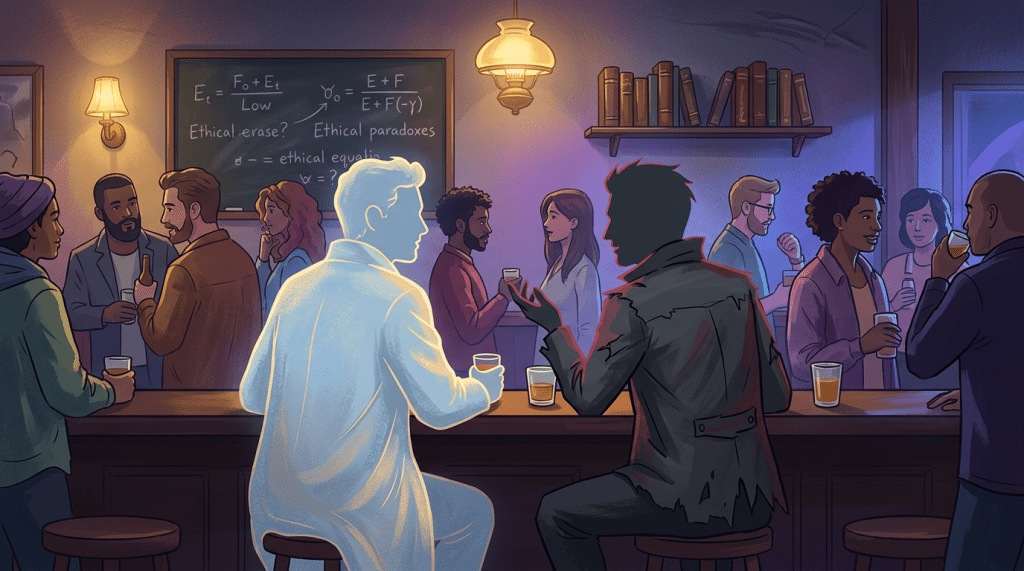
Author’s Note: I have just finished writing this. I put it through my thinkers and adversarial critique, a review, and I got an editor review in regards to spelling and grammar, but I left the post raw, unedited, like my other posts.
Please be aware this is a little hard-hitting at times. There are comments and topics that might be difficult for people to digest, but I feel they are important to include.
I’ve been thinking about this for a little while now, in bits and pieces, and I don’t have it all sorted out in my head. Maybe in writing it down, I might get some clarity.
When I started writing this, objectively I was facing some challenges. I was made redundant a bit over a year ago from a job I held from 2008–2025, though most of the last 2 years I was on a sabbatical, as they call it.
A couple of years prior to my retrenchment, I was diagnosed with and had surgery to treat bladder cancer. I have been in remission since. Around the time leading up to my retrenchment, I had a tumour removed from my left shoulder that turned out to be a rare kind of skin cancer called Dermatofibrosarcoma Protuberans, which meant just after my retrenchment I had to have further surgery to remove more of my shoulder to ensure they got all the cancerous bits. They then took a flap of skin from my chest and flipped it round to fill in the hole in my shoulder.
Late last year I decided to change my Gastric Sleeve to a Gastric Bypass, the hope being that this would actually result in significant weight loss. I have dropped, I think, around the 20kg mark, but for reasons I’ll go into in a minute, that stalled.
About 8 weeks ago I had to have another surgery, this time on the same shoulder as the DFSP removal. I had to have a Shoulder Arthroscopy, Subacromial Debridement, Biceps Tenodesis and Acromioclavicular Resection. I was in a sling for 6 weeks, no driving, which meant my Dad took me to my huge number of appointments during that time.
About a month before that surgery, the team that looks after my bariatric treatment (Gastric Bypass) had organised my regular blood work. They really should install a tap given the regularity of blood tests I have. Anyhow, they got the blood work and next thing I was being sent off to have an urgent iron transfusion. Like, if I couldn’t get it through my normal network, the head of my bariatric team would organise for someone within the hospital he works out of to get it done that day.
I worked it out and the following morning I had a transfusion. Happy days. My bloods were monitored, the iron bounced back all good. However, I saw my bariatric team again yesterday and the head of the team came in, looked at my blood work, and next minute I was downstairs in a CT having my upper body scanned.
I see him tomorrow to get the results, discuss what we do with them if they show anything, and if they don’t, basically book in to have an endoscopy and colonoscopy to rule out an internal bleed.
I saw my GP today, just had an appointment booked like normal. I needed a form filled in and to discuss some stuff, including my return to work, because that should be starting on the 1st of July.
We went through shit. She collated all my symptoms, one of them being I’m exhausted all the time — like, I sleep 12–16 hours a day. I worked prior to my surgery, my hours were reduced and I was tired, but we were putting that down to the pain. After, it was the same thing, but it’s been a while now so should be easing off. Anyhow, along with all my symptoms, when I mentioned return to work she said very directly that I wouldn’t be going back to work.
I should interject here — the plan was to go back to work, but firstly I had to ensure I had a job. Where I was working terminated my role when I went off for surgery, as I was still in my probation period, but had said to keep in contact and they would work things out when I could start again. The distinct impression being left that I still had a job to go back to.
This is where life decides that it wants to play a game. Some of my symptoms can be attributed to the bariatric surgery, in which case I’m not sure what we do there. I’m already taking a 2x dose of iron supplements and I eat iron-rich food, and that isn’t a working solution. I don’t really think having an iron infusion every 6–8 weeks is ideal either. However, it doesn’t give an answer to all — an infection answers others and makes sense, but bloods show no infection.
Lymphoma does fit quite snugly in what COULD be wrong. I highlight “could” because I don’t know yet. I had a suspicion that’s where things were turning, as my Dad has Non-Hodgkin’s Lymphoma so I have a decent knowledge of it, but I also put my symptoms through Perplexity and it was the top result as to what they are probably looking for.
So, if I were to be diagnosed with Lymphoma, that would make 3 primary cancers I have.
To add to this, when I was 22 I was injured at work and left with chronic back pain. I had another accident, this time at home — this just served to make things worse. My pain is dynamic, so one day it just hurts and the next I am in agony. I really have little idea how things will flow with that. I can go days, weeks in relatively minimal pain and then out of nowhere — with the only clue being a weather change — I am in exceptional pain and life takes on a very different character for a bit, until it just stops. Like, I’ll go to bed with pain driving me up the wall and wake up and it’s back to sore but manageable.
I also suffer from mental health issues, the primary being Schizoaffective Disorder. That is basically Schizophrenia and Bipolar getting together and making a love child — and bam, Schizoaffective Disorder. There are aspects of Schizophrenia and aspects of Bipolar mashed together into the one super being, well, person.
I, unbelievably for some, am well managed. I take my medications, I meditate (some of the time). Before I had my shoulder surgery and the whole exhaustion thing took on a new meaning of excessive sleeping, I was super structured. Up at 4am, every activity was laid out before me, I knew what I had to do at any given moment of the day, all the way until 8pm when I’d meditate in bed and go to sleep. I was very structured. I had to be — it’s a 1.5hr drive either way to work. I can’t eat for 30 minutes before or after a meal, so if I want a coffee in the morning I have to get up early so I can have it. At the time I had exercises for my back to do and it took me a while to get ready, so I was waking at 4am and leaving at a bit before 7am.
I am fortunate — I live with my Dad. When I had my first Brief Psychotic Episode — BTW, do not recommend, the brochure made that sound far more entertaining than it was — I was hospitalised for a while. After I was hospitalised, my parents moved me closer to them, into a property they owned. I was there for about a year, I was off work on income protection, and I could not get my shit together.
In the end, my parents, who were living in a house my sister owned, moved me in there. I have remained living with them ever since — so about 11–12 years. In that time we have moved a couple of times. My sister sold her place and moved with us, and then she moved out, and coming up to nearly 2 years ago my Mum passed away. So, it is just Dad and I now.
He is good for me and to me. I was going to say he can be a pain in the arse, but he really isn’t. I don’t see eye to eye with him on some issues, but we can generally discuss the topic, leave not agreeing but having discussed it calmly and somewhat objectively.
I loved my Mum, I think. She was often very hurtful, to me and to others (I won’t speak for them), but I found being with her a lot of the time very difficult because I felt less than when I left her presence. There is a lot more to it all that I won’t go into here, but even more than when I was young, she made me feel less than.
My sister and I don’t speak. After a number of interactions in which she appeared to be trying to act the same way Mum did to me, just with a more aggressive twist, I said that it was enough and blocked her on my phone and other contact avenues. This did not go down well — poor Dad was hounded about it — but I wasn’t backing down.
Recently I had spoken to Dad and said that there is a part of me that would like to reconnect — there has always been one — but there is a very large part that wants to protect. It would seem to me that I am equally as triggering for her as she seems to be for me.
I was going to explain further but, for her privacy, I will leave it at that.
As for my extended family, I don’t really speak to them much. I have a friend who I see from time to time, along with his partner occasionally.
Generally speaking, my personal life is very limited. I am a loner — I much prefer to write and ponder life, maybe watch a movie, than find a group of friends and do something somewhat mindless. Added to this, more so over the last few years, I am generally sick, recovering from being sick, or recovering from surgery. I have given you like 4 diagnoses, I think — there are like 25–30, something like that — these are primary diagnoses that are being actively managed. I have a team of 17 or 18 doctors/specialists. I’m down to 14 prescription medications (15 including the current opioid for my shoulder). I take a double dose of iron, I also take a double dose of Bariatric Multivitamins and Calcium/Vit D chews. I’m shit at monitoring my diabetes, though when I do check it’s generally really good, and my 3-monthlies all come back like as good as for a person without diabetes. Once they get this stuff going on at the moment sorted, I should be starting Mounjaro to try and help with the weight loss, as no one is happy with how poorly that is going, though they did admit yesterday I have medication that doesn’t help.
My medical costs eat up around about 25% of my fortnightly income when I am working full-time. Even with all the chaos that is my medical life, I still work, or at least try to. I would like to keep working for as long as I can. It’s not 100% a pride thing — it’s more a thing of, even if I were to get onto disability allowance, the payment would be like half my income. The things I’d have to give up to not work and have more time. I’d rather work. It’s not easy, but I have some stuff that I want. I bought my Mum’s old car after she passed away from my Dad, as I didn’t have a car at the time and was driving it anyway. I was working from home and my parents put a dividing wall in a spare room and made an office for me. The house Dad and I share is massive. It’s on 3 acres with like bugger all people for miles — it’s in a really beautiful area of the Adelaide Hills. Dad has the new master bedroom, built on before we bought the place, and I have the old one. Dad can close his area of the house off, so when I’m up and about and he is still sleeping, I don’t disturb him, which is good. If I’m asleep and he is up and about, unless he is driving one of those cranes with a wrecking ball at the end, I’m unlikely to wake up due to him.
My sister had 2 dogs that were left at our place when she moved out. One of which my Mum bought and was going to give to me, then she died, so Dad honoured that and allowed me to keep Paddington. Ever since he was gotten, he and I have had a special bond. He sleeps on my bed with me. When I’m up in the middle of the night he sits with me in his bed next to my computer. A lot of the time he is there, or warming his spot on the bed (which is the whole right side, according to him). He keeps me company, he plays with the other dog and spends a little time with Dad, but mainly he is with me. When I get home from going out, he is always ecstatic to see me.
Now, that isn’t comprehensive, but I want you to see that, like everyone’s life, mine has aspects that can be seen as good and aspects that can be seen as bad — even aspects of right and wrong, good and evil. I am not someone who has lived a life far from difficulties.
This is where my thought process has taken me. I’m not like hugely read on philosophy, Eastern schools of thought, anything like that. I’ve started listening to some books via Audible but nothing really on this thought process of mine. I also grew up in a very Christian household.
I have developed my own guiding principle over the past probably 6 months, maybe longer: “Observe without judgement, act with love and compassion.” This has its roots in mindfulness — the first part that I remember learning with the instructions was to “observe without judgement.” This was in relation to the feelings you were experiencing at the time, the thoughts you had that took you away from the meditation.
Not long after I started meditating, I thought to myself: why can’t this be applied to everyday life? So, over time, I have been trying not to react to things — to events, to feelings — by observing them without judgement. I don’t judge the events of my life as either good or bad, right or wrong, good or evil. I look at them and just see them as events, experiences that are as transient as I am.
This is not to say that I am not affected by the events. Currently I am waiting to potentially find out that I have a 3rd primary cancer — this is affecting me. I have feelings about this; part of those feelings is what led me to write this. I am not, however, consumed by those feelings. I observe that I am having them, I recognise that I am feeling more anxious than normal, that my mind is more centred on this possible outcome. I have no judgement over these feelings. These are neither bad nor good feelings — they are feelings. To an extent, they are feelings that can be expected in this situation.
I am not sad, I am not elated, but I have not had any confirmation of what is wrong. I know something is wrong — my symptoms point to the fact that something is wrong with my body. In this instance I mean that it is not working as intended, not that my body is bad. This is a flaw that I have had in the past — that I have considered my body to be bad, flawed, a failure. When I change my view, observe without judgement, then act with love and compassion, I realise that it is a body. It is not broken, it is not flawed or wrong in some way. It has issues functioning as we believe it to be intended and that should be attended to, but we should treat the body with love and compassion. See a doctor/specialist, engage in treatment, rest when it’s needed, push when that is needed too — care for your body, but also care for your being.
I am not really into hippy-dippy stuff, but meditation is a wonder drug. It has helped so much with my chronic pain and outlook on life. I can only imagine what things would be like if I did my practice regularly like I’d like to.
I have come to an understanding that there really isn’t, in many respects, a good or bad, a good or evil. They are one and the same. If you just had one — like you just had good — then you would not know that you had good; you would just have normal. When you add bad or evil, then you understand that there is “good,” but when you understand that they together make up a whole, then you understand that there is neither good nor bad — there is life.
I actually wonder — I’ll use Christian beliefs as a model because it’s what I know. Did Satan/Evil arise simply because there was God, and for God’s goodness to be seen, the opposite needed to exist to allow it to have something to shine against? It’s like light and dark — without dark you can’t recognise light. You can see it, it would be all you see, but you can’t recognise it. Without Satan, you can’t really recognise who God is, not in His fullness.
Very broadly my theory is that what makes an experience good or bad is us deciding that it is good or bad. I do go into this further later on, there are nuances to this of course so, bear with me. I could consider my current situation as bad, but if I choose to accept it as just a transient experience being neither good nor bad, then I can act with love and compassion more effectively. This may be towards myself but also towards others. If it turns out that it is Lymphoma, then I will have love and compassion for my Dad, who I expect will find this hard, as he has Non-Hodgkin’s Lymphoma and he may have quite a lot of emotions about this. Some might say that I should be focused on myself and processing the news myself. Removing the stigma of it being bad allows me to process much more easily because there is less “trauma” to deal with. This in turn opens room for me to help my Dad process his own.
Don’t misunderstand me — I am not hiding from what could be defined as negative experiences. I still struggle with the emotional side. When they arise, I go back to observing without judgement as soon as I can. I’m not a robot; I get caught up in emotion, but as soon as I realise, I take a step back and observe. In observing, I can see the root of my emotion. I am not judging why the root exists or how it makes me feel — I am only observing that it exists — and with this, I can act with love and compassion. Love allows you to heal; compassion allows you the time to do so.
If you place a good or bad label on an experience, this gets in the way of truly observing — you have judged, you have placed some agency outside of yourself. Typically, when we say something bad happened, it happened to me, not out of me, so you lose agency in this. If something happened, you have agency to define how you emotionally react to that experience.
As I said earlier, I have Schizoaffective Disorder. As such, I know the more extreme sides of emotions. I am sure that for others they get far more extreme than I have experienced, but for the purposes of this, and for the majority of people, I have likely experienced extremes either way more intensely. I don’t think any emotion is inherently wrong — I think uncontrolled emotions in general can be dangerous. Even if they are not acted upon, the impact uncontrolled emotions can have on the psyche of the person experiencing them can be really difficult to process.
I think our response to emotions is more within our control than we’re often told. Sure, if you’re happy you will find it hard to make yourself sad, but I am almost 100% sure that if you were ecstatic — you just got the job of your dreams or you won a massive payday and you are jumping for joy — but you had to walk into a funeral for a friend’s loved one, you would stuff that shit. You would still be happy, but you wouldn’t burst in there waving your arms around screaming, “I’m rich, fuck you all.”
We are able to contain our emotions depending on our circumstances. I know as a kid I could be incredibly sad, but if we had company, I’d best brighten my shit up and present myself appropriately. Did I always do that? I’m sure I didn’t — however, I was a kid — but the point is, it’s possible.
I am not saying go from bawling your eyes out and force yourself to be ecstatic. I also don’t want to indicate that every circumstance is the same. There are some events in life when the initial emotional response will be overwhelming and it won’t be possible to grapple with that and move to observing it without some time. There are some events and experiences that take so much from us that we become indebted to ourselves. By this I mean it takes so much energy — more so, so much of us, of our spirit — and this causes us to be indebted to ourselves, in that we have to spend time to re-energise, revitalise. It is about taking a step back as soon as you can, putting the emotion to the side, observing without judgement — without thinking “this is bad,” “what happened was evil,” etc. Just observe, get clarity, and then act with love and compassion. This is vital: act with love and compassion, to yourself and to those around you.
It is not to say what happened is not good or not bad or not even evil, but my question would be: does assigning that judgement help you? Does it help you to act with love and compassion? It’s a hard thing — it’s something I still try to reconcile with in different aspects of my life. Some things people have said and done to me, before I changed my thinking, I still struggle to put into context of this thought process, probably because I assigned a judgement to it already. At the moment I try and observe the emotion I have when I consider the situation. It does help to process things more easily, but it will take time.
I will say that experiences, regardless of how we interact with them, contain the potential to do us harm, just as they do to do us exceeding good. For instance, if someone was to give you a house — no catches, all taxes and duties paid for — this would do you good.
Before I make my next point, I want to be careful. There are experiences — abuse, assault, violence — where harm is profound. Reframing doesn’t change what happened and I don’t want to suggest that it does. I don’t want to seem like I am minimising what has happened. In the moment you may have feelings, intense feelings, which I am not saying to try and stuff down. It is important that feelings are felt. I think that when you can, when you have started to find yourself again, look at how you frame the experience, how you want to exercise your agency over how you label it. The harm is real — the label isn’t what I’m contesting; it’s whether the label serves your recovery.
I have been on the receiving end of persistent, recurring violence when I was in school. It has had a profound impact on my life. I think one of the reasons I am a loner is because of the intensity of the abuse and lack of action from teachers, etc., and even the seeming lack of care or empathy of classmates who may not have been physically and/or verbally abusing me. They, to the best of my recollection, were not attempting to help, support, or prevent it from happening. They did not provide any support when I went to faculty. They, in my mind, are as complicit in the abuse as if they were actively involved, save a couple who were at least nice to me for the most part.
So I do understand that me saying “reframe after such an event” is like — sure, buddy, it’s just so easy, apparently nothing bad has ever happened to you. Again, this is still a — I’m not sure if this is real-world practical. And there are some kinds of assault I am just unlikely to experience, and I am certainly not trying to tell anyone — let alone a person who has been through any kind of sexual or childhood abuse — that they just need to reframe it.
Things in life, regardless of how quickly we move from experience to observing without judgement, have the potential to cause harm — great harm. I am very aware of this. When we move to observation, I am not saying we are blocking harm or stopping it completely. We are slowing it and placing its influence and impact on our lives more within our own agency. By this I am saying that we have active influence over our thoughts, behaviours, and outcomes and, by extension, to an extent, therefore our emotions.
I look back to my childhood and the experiences — repeated trauma, repeated neglect — they have built a pattern that my mind now sees in contexts where others would not, and therefore I react differently than others. The event and my trauma have to be addressed separately, but if I apply this philosophy then I observe when I am reacting in accordance with a trauma response. I don’t judge it as “this is wrong,” “why can’t I just be normal,” “I’m broken and can’t be fixed.” I look at the new experience and then I apply love and compassion to myself. I acknowledge there is pain — that pain is OK, but it can’t define me and it doesn’t define me. I show myself love in moving ahead regardless of my trauma response if I can, and I show compassion if I can’t. None of it is right, wrong, good or bad. It just is what it is, and I can either embrace who I am, work with it and encourage myself to heal from the trauma, or I can hide, suffer in the pain and continue to struggle along.
Writing this was kind of a talking-to-myself moment. As I say, I am a loner. I have my Dad and a good friend who I don’t see nearly often enough. But the reality is my Dad will pass away — hopefully not for a long time — but I’m not married, I have my dog, and I know that seeing my friend once a month will not be sufficient for maintaining my mental health. It has been on my mind quite a bit that I need to build a more robust network of friends who I can spend time with, grow with and rely upon, as they can me.
This piece isn’t a complete thought — this is something that I am still trying to get my head around. Thoughts, feelings, emotions, experiences — they aren’t good or bad unless we decide they are. I’m not saying you’re to blame, or even that you’re to blame for your own trauma, because shit, I’m right there too, as I’ve said. I just think if we allow our thoughts, feelings, emotions, experiences to have free rein, to dictate trauma, then maybe we are giving up our own agency. Agency over your response is not the same as responsibility for what happened to you — one is yours, the other never was.
Throughout this I have referred to good and bad labels. I have stated that it is possible that some events will cause you harm. I have even labelled things throughout the piece as both good and bad. The label itself is not an issue — you can label anything whatever you like; it’s about how it serves you. To label my relationship with my Dad a good thing serves me well. I like the relationship I have with my Dad. It is different to what I had when I was younger, in many ways more aligned with what I would have liked to have when I was younger. So the label serves me well.
The primary aspect of good/bad labelling that I am looking at is really its relevance. At the point of writing this, my working title is “There is no good” — that is what I started all this based on. It’s not that there is no good or there is no bad, but is the label of good or bad relevant? In the context of harm, which is real — I am not contesting this at all — but does attaching a moral label help us move through an experience? How does it help you heal, find peace?
What is going on in my life now I choose not to label or define as bad. It is a series of events that are happening, that I need to be present for and need to address, but I don’t need to treat them as bad events, as being a negative, traumatic or traumatising series of events. They can just be events — like going to work on a normal day is neither good nor bad, it just is.
Having agency in my life has become a big thing for me, particularly in regards to my medical needs. Maybe this is where all this started, not with meditation. Maybe this is a drive towards having greater agency over my life, how I feel, how I interpret events and experiences. I am not suggesting that we bury our heads in the sand and ignore how we feel — quite the opposite. Head up, eyes wide open, 100% alert, really observe. Go beyond the surface distraction and the noise of immediate reaction to: how do I really feel, what is the true motive behind my feeling? No judgement, no labels — it’s OK no matter what the answer, but actually know it. Life can be challenging — fuck that, it is challenging — but it doesn’t have to be a bad thing to be challenged. It’s weird; I think most people aren’t actually afraid of dying. They are afraid of suffering and/or being the cause of suffering for others. Dying is kinda easy — it just happens; by this I mean the act of actual dying. Suffering is hard. Seeing how it impacts those around you is harder.
This is the challenge I have. With my pain and conditions outside of what I am writing here, I would say I suffer, or I am suffering. I used to consider what I am going through as a bad thing, a horrible thing. I’m by no means saying it isn’t, and I’m also not saying I have it worse than anyone else. But when — as I said above — dying is kinda easy, it just happens (by this I mean the act of actual dying), suffering is hard, and seeing how it impacts those around you is harder — that speaks volumes to me, or at least it did. When I talk about my experiences, I try not to use words like “I am suffering” or “I suffer from.” I used to think the whole framing thing was ridiculous. I think the context in which I was shown it — basically making the person not a victim in the terminology — is a nice thought, but it was just terminology.
When I apply my philosophy to my experiences and I say that I experience chronic pain, or I am diagnosed with Schizoaffective Disorder, I am not changing who I am in relation to victimisation. Whether I say I suffer from chronic pain or I have Schizoaffective Disorder, I never felt like a victim. What is happening with my way of it is I am removing the emotional connection, the definition of the thing being good or bad. We talk about stigma against mental health — there is stigma in chronic pain, there is stigma when you have multiple disorders, symptoms without a diagnosis, go to the doctor regularly, go to the pharmacy a lot, have a lot of time off for appointments. There is stigma flying all over the joint. Stigma is more or less social judgement, and socially we thrive on judgement. The other side of this is we apply it to ourselves: I shouldn’t be like this, I should just tough it out, what would so-and-so say, they are going to be so sick of seeing me. I used to feel like my GP was going to see me in the waiting room and be like, “No, get out, had enough of you.” But I realised one day that she doesn’t care — like, she is caring, she looks after me, but I fill an appointment slot. She gets paid for that time whether she sees me or someone else. It might as well be me if I need to be seen for something.
When you remove the good or bad label, you also often remove the stigma you attach to something as well. If, like me, you have mental health issues, you might have negative labels all over the joint about them. They may even prevent getting treatment. When you take a moment to observe without judgement, act with love and compassion, those labels start to fall off, they make less sense, and with that you might find a way to better accommodate your mental health situation in your life.
I’m going to diverge a bit here. I said accommodate your mental health situation in your life. I said accommodate on purpose — not heal, or treat. While you may work with someone or on your own to treat your mental health condition and see significant success, I think it is that making a place for your mental health is far more rewarding. I have quite a complex mental health setup. I can’t predict what is going to happen. I can go from being managed to unmanaged very quickly. I can, on the outside, appear to be fine, but internally I’m far from it — I’m hallucinating, hearing things, all sorts. Generally I’m fine, but I make room for these things. I have stopped fighting them a long time ago. At times through writing this, I have been hallucinating — the page has warped and looked like the words are being sucked into a black hole. I allow room for that. It doesn’t mean I stop — if I need to, I do — it means I don’t fight it. I observe, no judgement. If I need to take next steps, I have a management plan that I can follow. Normally I manage with little intervention. Sometimes it does mean stopping and lying down. I just thought that might benefit someone. I will do a separate post about this later.
As stated, this is a work in progress. I also acknowledge that my situation makes this somewhat easier for me to say. I appreciate that there are people in situations where this outlook may be more challenging, and I don’t want to suggest that it is universally accessible. I think there is a lot of truth in what I am saying, but for me to say this to someone who does not have the resources, stability and support that I have would not be acting with love and compassion.
I am open to thoughts and opinions. I understand and appreciate that this isn’t the easiest idea to accept or digest. From my Claude critiques I learned that there is some basis for this in earlier philosophies that I am not aware of, but I was glad to be in some kind of company — that I am not just having a weird mental tangent. I dunno, I really don’t. It seems to be helping me. I’m still working through my issues. I see my psychologist and my psychiatrist monthly — we always have something to fill our time with. It’s more that in the moment I’m not trying to process everything: the event, the experience, the emotions, the thoughts bouncing from “how will I this” to “how will I that.” I take a step back and allow room for peace. I observe rather than interact, and once they have expended their energies, then I take my place, I exert my agency, and I dictate how things go. If harm or good has occurred, then again, with my own agency, I address those things.

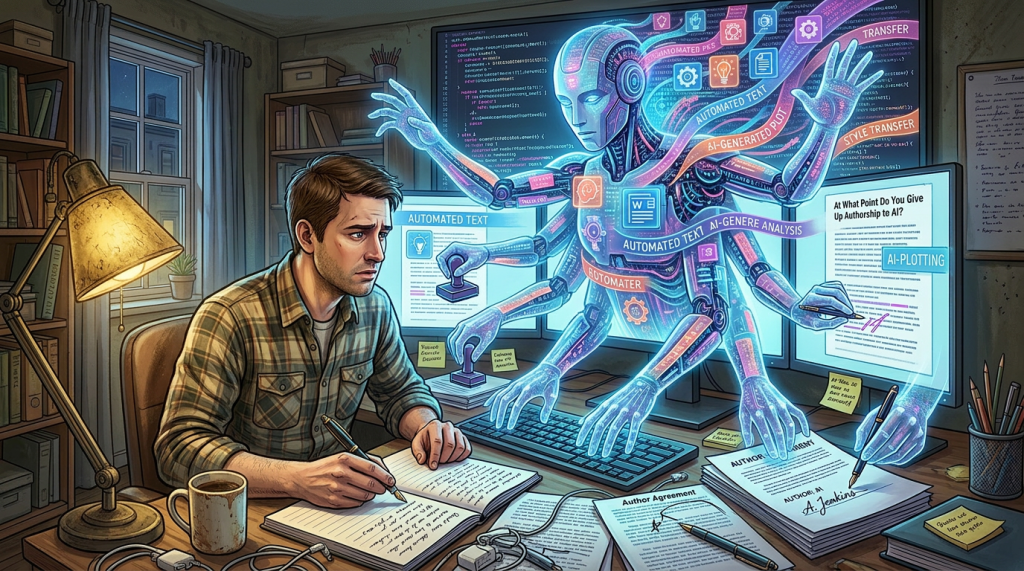
 Arctic Zombie
Leave a comment